 September 17, 2026 · Expense Manager
How to save money every month: A practical step-by-step plan
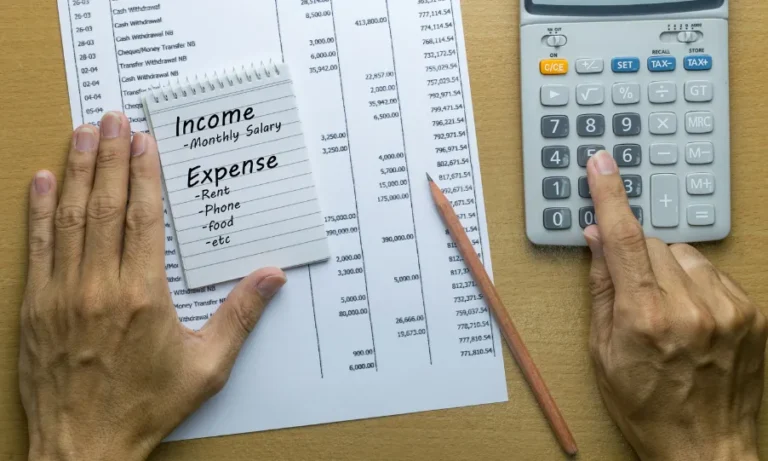
Saving money every month becomes much easier when saving is part of your monthly plan rather than whatever happens to remain at the end.
A practical system looks like this:
Track your money → Choose a savings goal → Decide an amount → Save early → Control spending → Review → Increase gradually
You do not need to start by saving a large percentage of your income.
If ₹500, ₹1,000 or ₹2,000 per month is what your current budget can support, starting consistently is more useful than setting an ambitious savings target that you abandon after a few months.
The goal is to create a monthly saving system you can repeat.
Quick summary: How to save money every month
If you want to start saving consistently:
- Calculate your actual monthly income.
- Track where your money currently goes.
- Choose a specific reason for saving.
- Set a realistic monthly savings target.
- Add savings to your monthly budget.
- Move money toward savings early in the month where practical.
- Review and reduce unnecessary spending.
- Prepare separately for irregular expenses.
- Build an emergency fund.
- Review your progress every month.
- Increase savings when your income or expenses improve.
The core principle is simple:
Do not depend entirely on leftover money. Give saving a specific place in your monthly budget.
SEBI’s personal-finance education explains saving as setting aside part of your income for future needs and emphasizes budgeting, managing expenses and regularly allocating money toward financial goals.
Learn more from SEBI’s official saving guidance.
Why is it difficult to save money every month?
For many people, the problem is not a lack of intention.
The problem is the order in which money gets used.
A typical month may look like this:
Income → bills → groceries → shopping → subscriptions → entertainment → unexpected expenses → save whatever remains
Often, very little remains.
A more deliberate system changes the sequence:
Income → essential commitments → planned savings → controlled discretionary spending
This does not mean saving while ignoring rent, food, healthcare, EMIs or other essential expenses.
It means treating savings as one of the purposes of your income rather than an accidental month-end result.
Saving can also become difficult when you:
- do not know how much you really spend
- underestimate frequent small purchases
- forget annual and irregular expenses
- set an unrealistic savings target
- save without a defined goal
- increase spending whenever income rises
- depend only on motivation
- repeatedly withdraw savings for predictable expenses
In many cases, the solution is not greater financial discipline.
It is a better system.
Step 1: Know exactly how much money comes in
Start with the money that is actually available to you.
For salaried employees, that generally means take-home income rather than gross salary.
Your income might include:
- salary
- freelance income
- business income
- commissions
- bonuses
- rental income
- pension
- other regular income
If your take-home salary is ₹60,000 per month, use ₹60,000 as the starting point for your monthly plan.
Do not create a spending and savings plan around income that never reaches your account.
What if your income changes every month?
Freelancers, self-employed professionals and commission-based workers need a more flexible system.
Look at several months of income and identify:
- your average income
- your lower-income months
- essential monthly expenses
- irregular business or personal costs
Avoid building your lifestyle around your highest-earning month.
During stronger months, you can direct part of the additional income toward:
- savings
- emergency reserves
- future expenses
- debt reduction
- lower-income-month buffers
Step 2: Track your spending before trying to reduce it
You cannot confidently decide where to save money if you do not know where your money currently goes.
Track your expenses for at least a few weeks.
Include all payment methods:
- cash
- UPI
- debit cards
- credit cards
- digital wallets
- bank transfers
- recurring payments
Do not ignore small purchases.
A ₹100 or ₹200 transaction may appear insignificant, but repeated transactions can become a meaningful monthly expense.
If you are new to expense tracking, read:
How to track daily expenses on your phone
Use simple spending categories
Start with categories such as:
| Category | Examples |
|---|---|
| Housing | Rent, maintenance |
| Food | Groceries, dining |
| Transport | Fuel, public transport, taxis |
| Utilities | Electricity, mobile, internet |
| Healthcare | Medicines, consultations |
| Debt | EMIs, credit-card payments |
| Shopping | Clothing, household purchases |
| Entertainment | Streaming, movies, outings |
| Subscriptions | Apps, memberships |
| Savings | Emergency fund, goals |
| Other | Miscellaneous expenses |
You do not need dozens of categories.
Use enough detail to understand your spending and make decisions.
Step 3: Calculate how much you currently save
Before choosing a new target, understand what happens today.
Use:
Monthly income − monthly expenses = monthly surplus or deficit
For example:
Monthly income: ₹60,000
Monthly expenses: ₹55,000
Potential monthly surplus:
₹60,000 − ₹55,000 = ₹5,000
This gives you a starting point.
However, make sure your expense calculation includes predictable costs that do not happen every month.
Examples include:
- annual insurance
- vehicle maintenance
- school fees
- annual subscriptions
- festivals
- travel
- property-related expenses
Otherwise, your apparent surplus may be higher than the amount you can genuinely save.
Step 4: Give your savings a purpose
Saving becomes easier to measure when the money has a specific job.
Instead of:
“I want to save more.”
use:
“I want to save ₹60,000 over the next 12 months.”
That becomes:
₹60,000 ÷ 12 = ₹5,000 per month
SEBI recommends making financial goals specific, measurable, achievable, realistic and time-bound.
Official guidance:
https://investor.sebi.gov.in/moneymatters-budandfinangoal.html
Possible savings goals include:
- emergency fund
- home deposit
- travel
- education
- vehicle
- laptop or phone replacement
- wedding
- business startup fund
- annual insurance payments
- retirement
- other long-term financial goals
Step 5: Separate short-term and long-term savings
Money needed six months from now has a different purpose from money intended for retirement.
You can organize goals broadly as:
Short-term goals
Examples:
- emergency buffer
- travel
- annual premiums
- electronics
- small planned purchases
Medium-term goals
Examples:
- vehicle
- education
- business startup
- home down payment
Long-term goals
Examples:
- retirement
- children’s higher education
- long-term wealth goals
The purpose is not to create complicated investment structures immediately.
It is simply to stop one generic “savings” balance from being expected to pay for everything.
Step 6: Choose a realistic monthly savings amount
There is no universal savings percentage that works for every person.
You may see recommendations suggesting:
- 10%
- 20%
- 30%
or another percentage of income.
These can provide useful reference points, but your actual ability to save depends on:
- income
- rent or housing
- dependants
- debt
- medical needs
- location
- family responsibilities
- emergency reserves
- financial goals
Start with an amount you can repeat
Suppose your income is ₹45,000.
A 20% target would equal ₹9,000.
But if ₹9,000 is unrealistic today, forcing yourself to hit that number does not automatically improve your finances.
You might begin with:
₹2,000 per month
and then progress to:
₹3,000 → ₹4,000 → ₹5,000
as your finances improve.
Consistency matters.
Step 7: Put savings inside your monthly budget
Do not treat saving as something outside your budget.
Make it one of your planned categories.
For example:
| Category | Monthly budget |
|---|---|
| Housing | ₹15,000 |
| Food | ₹8,000 |
| Transport | ₹4,000 |
| Utilities | ₹4,000 |
| EMI | ₹6,000 |
| Personal/lifestyle | ₹7,000 |
| Savings | ₹10,000 |
| Other | ₹6,000 |
| Total | ₹60,000 |
These numbers are illustrative only.
Your actual budget should reflect your circumstances.
SEBI’s income and expense management guidance recommends budgeting, prioritizing essential costs, monitoring expenses and regularly allocating money toward future financial needs.
https://investor.sebi.gov.in/moneymatters-inc-exp.html
Step 8: Save earlier in the month when practical
One common approach is known as pay yourself first.
Instead of:
Income → spend → save leftovers
you move toward:
Income → planned savings → manage remaining money
For example:
Monthly salary: ₹60,000
Savings target: ₹5,000
Amount available for other planned expenses: ₹55,000
This does not mean savings should come before food, housing, healthcare or required financial obligations.
It means savings should have a defined place in the plan.
Step 9: Automate saving if it suits your cash flow
If your income arrives predictably, an automatic transfer can make saving easier.
For example:
Salary arrives on the 1st.
Savings transfer happens on the 2nd.
Instead of deciding every month whether to save, the process becomes part of your routine.
What if your income is irregular?
Rigid automation may not work well for freelancers or people with highly variable income.
A percentage-based system may be more practical.
For example:
Income received → save 5%
₹40,000 income → ₹2,000 saved
₹70,000 income → ₹3,500 saved
₹1,00,000 income → ₹5,000 saved
The percentage is only an example.
Use an amount appropriate to your circumstances.
Step 10: Separate savings from everyday spending
If all your money stays in one account, your bank balance can become misleading.
Suppose your balance is:
₹35,000
But ₹10,000 is reserved for an emergency fund.
Your actual everyday spending balance is closer to:
₹25,000
Consider separating money according to purpose using:
- savings accounts
- goal-specific accounts
- savings buckets
- clearly defined accounts inside an expense-management system
The principle is:
Money reserved for a future goal should not look like ordinary spending money.
Step 11: Look at your biggest flexible spending categories first
Saving money does not necessarily require eliminating every coffee or small pleasure.
Start by identifying categories where changes can have a meaningful monthly effect.
Examples include:
- dining and delivery
- shopping
- transportation
- subscriptions
- entertainment
- mobile/internet plans
- travel
- memberships
Suppose your monthly flexible spending is:
| Category | Monthly amount |
|---|---|
| Dining and delivery | ₹6,000 |
| Shopping | ₹5,000 |
| Entertainment | ₹3,000 |
| Subscriptions | ₹2,000 |
| Total | ₹16,000 |
A 20% reduction would free:
₹3,200 per month
Over a year:
₹38,400
This is only an illustrative example.
The lesson is:
Look for meaningful savings before obsessing over dozens of tiny cuts.
Step 12: Reduce expenses without making life miserable
A saving plan should be sustainable.
Food and groceries
Consider:
- planning meals
- checking what you already have
- preparing a shopping list
- comparing prices
- reducing food waste
- limiting unnecessary delivery orders
Dining
Instead of eliminating dining completely:
- choose a monthly limit
- decide how often you will order
- reserve dining for occasions you value
Subscriptions
Review:
- streaming services
- cloud storage
- apps
- software
- memberships
- gym subscriptions
Ask:
Would I subscribe to this again today?
If not, cancellation or downgrading may make sense.
Shopping
For non-essential purchases, introduce a waiting period.
A 24- or 48-hour delay can help separate an actual need from impulse spending.
Step 13: Plan for irregular expenses
Some expenses do not occur monthly, but they are still predictable.
Examples include:
- annual insurance
- vehicle servicing
- school expenses
- festivals
- gifts
- annual subscriptions
- vacations
- property-related payments
Suppose annual vehicle insurance costs ₹12,000.
Instead of finding ₹12,000 suddenly:
₹12,000 ÷ 12 = ₹1,000 per month
Set aside ₹1,000 monthly.
This creates a sinking fund for the future expense.
Irregular expenses are not always emergencies
There is an important difference.
Annual insurance premium: predictable.
Unexpected hospitalization: potentially an emergency.
Planning for predictable expenses helps protect your emergency savings.
Step 14: Build an emergency fund gradually
An emergency fund is money reserved for genuine unexpected financial problems.
Examples include:
- job loss
- urgent healthcare expenses
- essential home repair
- major vehicle repair
- temporary loss of income
You do not need to build the entire fund immediately.
If your long-term target feels large, divide it into stages.
For example:
Stage 1: ₹10,000
Stage 2: ₹25,000
Stage 3: ₹50,000
Stage 4: Longer-term target based on your needs
Your appropriate emergency-fund target depends on factors such as:
- essential monthly expenses
- income stability
- dependants
- household income
- insurance
- employment stability
Someone with irregular freelance income may need a different buffer from someone in a stable dual-income household.
Step 15: Keep emergency savings separate from planned spending
Emergency funds often disappear because they gradually become:
- vacation money
- festival money
- new phone money
- shopping money
- vehicle servicing money
Consider separate savings categories such as:
Emergency fund
Travel fund
Annual expenses
Home goal
Education goal
Different goals should ideally have different purposes.
Step 16: Review recurring payments regularly
Recurring expenses can become invisible.
Every few months, review:
- streaming services
- software
- cloud storage
- apps
- gym membership
- premium services
- memberships
Classify them as:
Keep
Downgrade
Cancel
Do not cancel a service simply because it costs money.
Ask whether you still receive enough value from it.
Step 17: Watch for lifestyle inflation
Lifestyle inflation happens when expenses rise automatically as income increases.
You receive a raise and gradually:
- dine out more
- upgrade your phone
- buy a more expensive car
- shop more frequently
- add subscriptions
- increase travel spending
Eventually, the larger salary feels just as tight as the previous one.
When income increases, decide how the additional money should be allocated before your lifestyle absorbs all of it.
For example:
Monthly increase: ₹10,000
Possible allocation:
- ₹4,000 additional savings
- ₹2,000 additional debt repayment
- ₹2,000 lifestyle improvement
- ₹2,000 another financial goal
This is only an example.
The principle is to let savings improve alongside lifestyle.
Step 18: Use bonuses and unexpected income deliberately
Additional income might include:
- annual bonus
- incentive
- freelance payment
- gift
- refund
- business windfall
Decide how to use the money before spending it.
You might divide it between:
- savings
- debt reduction
- financial goals
- discretionary spending
There is no universal percentage.
The benefit comes from making a deliberate decision.
Step 19: Manage debt and saving together
Debt repayments and savings both compete for your monthly cash flow.
If you have expensive debt, accumulating large savings while paying substantial interest may not always make financial sense.
However, sending every available rupee toward debt can also leave you vulnerable if an emergency occurs.
A practical sequence might involve:
- covering essential expenses
- keeping required debt payments current
- building an initial emergency buffer
- prioritizing expensive debt where appropriate
- strengthening savings as debt declines
The right balance depends on your circumstances and borrowing terms.
Step 20: Track your savings every month
Do not track only spending.
Track saving too.
For example:
| Month | Savings target | Actual savings |
|---|---|---|
| January | ₹5,000 | ₹5,000 |
| February | ₹5,000 | ₹3,500 |
| March | ₹5,000 | ₹5,500 |
| April | ₹5,000 | ₹5,000 |
If you miss your goal, ask why.
Possible reasons include:
- emergency expense
- income reduction
- higher necessary costs
- overspending
- unrealistic savings target
Then adjust.
One difficult month does not mean your savings plan has failed.
A practical example: How to save ₹5,000 every month
Suppose Neha earns:
₹50,000 per month
Her current spending is:
| Category | Monthly spending |
|---|---|
| Rent | ₹14,000 |
| Food and groceries | ₹9,000 |
| Transport | ₹5,000 |
| Utilities | ₹4,000 |
| EMI | ₹6,000 |
| Shopping | ₹4,000 |
| Entertainment/subscriptions | ₹3,000 |
| Other expenses | ₹3,000 |
| Total | ₹48,000 |
She currently saves:
₹2,000 per month
Her target is:
₹5,000 per month
The savings gap is:
₹3,000
After reviewing her spending, she decides to:
- reduce food delivery by ₹800
- reduce shopping by ₹1,000
- cancel or downgrade subscriptions worth ₹500
- reduce miscellaneous spending by ₹700
Total additional monthly capacity:
₹3,000
That brings her approximate monthly savings to:
₹5,000
If maintained for 12 months:
₹5,000 × 12 = ₹60,000
The example is illustrative and excludes interest or investment returns.
The important lesson is:
Calculate the gap between what you save today and what you want to save.
You may not need to redesign your entire lifestyle.
How to save money every month on a low income
Generic advice to save 20% of income can be unrealistic when most of your money already goes toward necessities.
Use a different approach.
Start small
If you can save ₹500 per month:
₹500 × 12 = ₹6,000 per year
That is still progress.
Prioritize consistency
A small saving that happens every month creates both a habit and a financial buffer.
Review large expenses first
Small daily savings have limited impact if major costs consume most of your income.
Where realistically possible, review:
- housing
- transportation
- debt
- recurring services
Do not feel guilty about necessities
Food, housing, medicines and essential transportation are necessary expenses.
Financial planning should reflect reality.
Use income growth strategically
Sometimes increasing income provides more opportunity than repeatedly cutting already-essential expenses.
When income rises, direct part of the increase toward savings before your spending rises automatically.
How to save money when income is irregular
For freelancers, contractors and business owners, fixed monthly savings targets can be difficult.
A percentage-based approach may work better.
For example:
Every time income arrives, save 5%.
You can also divide irregular income into:
- essential expenses
- tax or business requirements
- low-income-month buffer
- emergency savings
- financial goals
Track business and personal money separately where possible so you can see what is genuinely available for personal saving.
How Expense Manager can help you save money every month
An expense tracker cannot save money for you.
What it can provide is visibility.
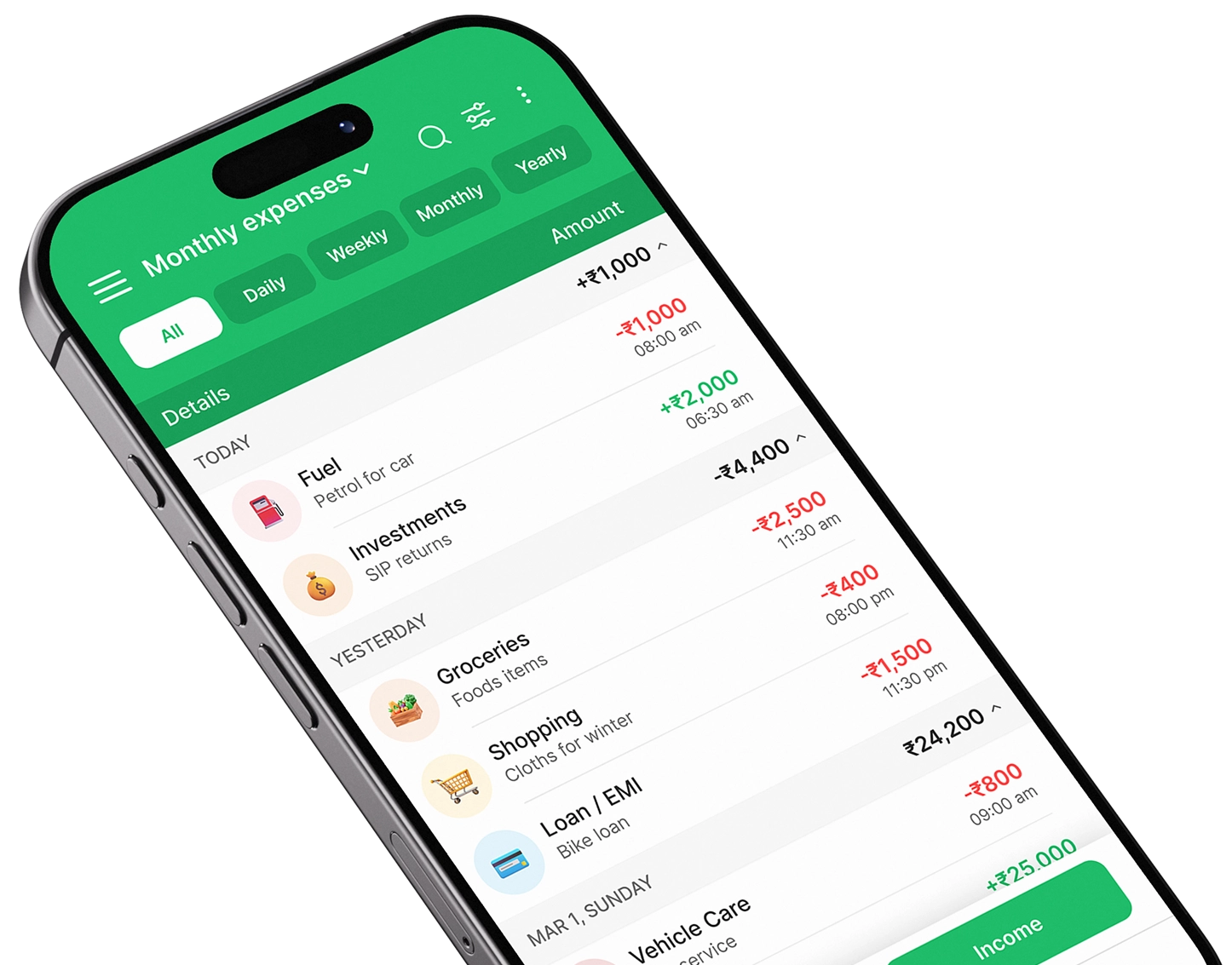
Expense Manager helps users record income and expenses, organize spending and review financial activity.
A simple process becomes:
Track → Understand → Adjust → Save
For example, your monthly spending report might show:
- dining: ₹8,500
- shopping: ₹5,500
- subscriptions: ₹2,000
- entertainment: ₹3,000
You can then decide whether those amounts reflect your priorities.
Expense Manager supports features such as:
- income and expense tracking
- categories and subcategories
- multiple accounts
- budget management
- recurring transactions
- spending reports
- account-wise views
- PDF and Excel exports
You can learn more on the Expense Manager FAQ.
Download Expense Manager
If you want to track everyday expenses and review your monthly spending from your phone, Expense Manager is available on both Android and iPhone.
Google Play: Expense Manager App: Money Tracker
Apple App Store: Expense Manger: Budget App
You can also compare features to consider when choosing an expense tracker in our guide to expense manager apps.
The purpose of using an expense tracker is not to make you feel guilty about spending.
It is to replace assumptions with accurate information.
A simple monthly saving routine
Saving does not require daily financial analysis.
On payday
- confirm income
- allocate your planned savings
- check upcoming bills
- review any major irregular expenses
During the month
- record spending
- monitor important categories
- avoid using goal savings for normal spending
Once a week
Spend a few minutes checking:
- spending so far
- remaining budget
- upcoming bills
- unusual expenses
At the end of the month
Review:
Income → expenses → planned savings → actual savings → goal progress
Ask:
- Did I reach my savings target?
- If not, what caused the difference?
- Which categories increased?
- Was there an irregular expense?
- Is next month’s target still appropriate?
- Can I increase savings slightly?
What should you do if you cannot save one month?
Do not abandon your plan.
Identify the reason.
A genuine emergency happened
Use emergency savings for their intended purpose and rebuild gradually.
A predictable annual expense appeared
Create a monthly sinking fund for it going forward.
You overspent
Identify the category and adjust next month’s budget.
Your income dropped
Reduce your savings target temporarily rather than borrowing simply to maintain an arbitrary target.
Your original target was unrealistic
Change it.
A savings plan should adapt to real life.
Common mistakes that make saving harder
Saving only what is left
Often nothing remains.
Better approach: Include savings in your monthly plan.
Choosing an unrealistic target
Repeatedly missing an aggressive target can become discouraging.
Better approach: Start with an amount you can maintain.
Focusing on tiny expenses while ignoring big categories
Saving ₹50 occasionally may matter less than reducing a recurring ₹2,000 expense you no longer value.
Better approach: Review larger flexible expenses first.
Ignoring annual expenses
Predictable annual costs repeatedly consume savings.
Better approach: Save small monthly amounts toward them.
Keeping all savings in one bucket
Emergency money becomes travel money. Travel money becomes shopping money.
Better approach: Separate important goals.
Saving without a purpose
Goal-free savings can be easier to spend.
Better approach: Give important savings an amount and target date.
Increasing lifestyle as soon as income rises
Income improves but savings remain unchanged.
Better approach: Direct part of every meaningful income increase toward future goals.
Never reviewing progress
A savings system can quietly stop working.
Better approach: Review monthly.
How much should you save every month?
There is no single correct number.
A useful savings target should be:
- affordable after essential expenses
- compatible with required debt payments
- connected to your goals
- realistic enough to repeat
- adjustable as circumstances change
If you can currently save only 5% of your income, starting there is still useful.
If your financial position allows substantially more, your goals may justify a higher savings rate.
The better question is:
“How much can I consistently save while meeting essential obligations and progressing toward my goals?”
How can you save ₹10,000 every month?
Start by measuring your current savings.
Suppose you already save:
₹4,000
Your gap is:
₹10,000 − ₹4,000 = ₹6,000
Instead of asking how to suddenly cut ₹10,000, look for the ₹6,000 difference.
Review:
- major flexible expenses
- subscriptions
- recurring charges
- shopping
- dining
- transportation
- debt costs
- possible additional income
The target must still fit your actual finances.
Is it better to save daily, weekly or monthly?
There is no universal answer.
For salaried employees, saving after payday can be convenient because income arrives on a predictable schedule.
For someone with irregular income, smaller transfers whenever income arrives may work better.
What matters is:
amount + consistency + goal
Someone who transfers ₹5,000 once per month and someone who saves smaller amounts that total ₹5,000 have made the same monthly contribution.
Choose the method you are most likely to maintain.
Frequently asked questions
What is the easiest way to save money every month?
Track your spending, choose a realistic savings target and include it in your monthly budget. Where practical, allocate savings shortly after receiving income instead of depending completely on what remains at the end of the month.
How much money should I save every month?
There is no universal percentage. Your target should depend on income, essential expenses, debt, family responsibilities, financial goals and existing savings. Start with an amount you can maintain consistently.
How can I save money on a low salary?
Start small and focus on consistency. Track your actual spending, review meaningful flexible expenses and avoid cutting essential costs simply to meet an arbitrary savings percentage.
Should I save money before spending?
Essential expenses and required obligations need to remain affordable. Within that realistic budget, allocating savings early can help prevent discretionary spending from consuming the money you intended to save.
Should I automate monthly savings?
Automation can help when income is predictable. With irregular income, a percentage-based or manual saving system may be more flexible.
How much should I keep in an emergency fund?
There is no single amount appropriate for everyone. Consider your essential monthly expenses, job stability, dependants, insurance and household income when choosing a target.
Does tracking expenses really help save money?
Tracking does not automatically reduce expenses. It shows where your money is going so you can decide what to keep, reduce or eliminate. That information makes a savings plan more realistic.
What should I do if I cannot save every month?
Identify why. A genuine emergency, lower income or necessary expense may justify temporarily reducing savings. If unnecessary spending caused the shortfall, adjust that category the following month.
Should I save money or pay off debt first?
The answer depends on the type and cost of the debt, required payments, emergency reserves and your wider financial circumstances. Expensive debt can deserve priority, but having no financial buffer can also make you dependent on borrowing again after an emergency.
Which app can help me track spending and save money?
Expense Manager can help you record income and expenses, organize spending into categories, create budgets and review monthly financial activity.
Google Play: Expense Manager App: Money Tracker
Apple App Store: Expense Manger: Budget App
Conclusion
Saving money every month becomes easier when you stop treating it as a test of willpower and start treating it as a system.
Begin with your real numbers.
Know your income.
Track your expenses.
Choose a savings goal.
Set a realistic target.
Put savings in your budget.
Plan for irregular costs.
Review your progress.
Increase your savings when you can.
You do not need to transform your finances in one month.
Saving ₹1,000 consistently can be more useful than repeatedly planning to save ₹10,000 and ending the month with nothing.
As your income, habits and financial circumstances improve, adjust your target.
If you want clearer visibility into where your money goes, Expense Manager can help you track transactions, categorize expenses, create budgets and review monthly spending patterns.
Download it here:
Google Play:
https://play.google.com/store/apps/details?id=com.pavansgroup.expensemanager
Apple App Store:
https://apps.apple.com/us/app/expense-manager-budget-buddy/id6744145641
The goal is not to stop spending.
It is to make sure part of the money you earn consistently remains available for the future.
Author bio
The Expense Manager editorial team creates practical educational content about expense tracking, budgeting, saving and everyday personal finance. Expense Manager is developed by Pavans Group Techsoft Private Limited.
This article provides general educational information only and does not constitute individualized financial, investment, tax or legal advice.
Take control of your finances
Download Expense Manager and start your smarter money journey today.